
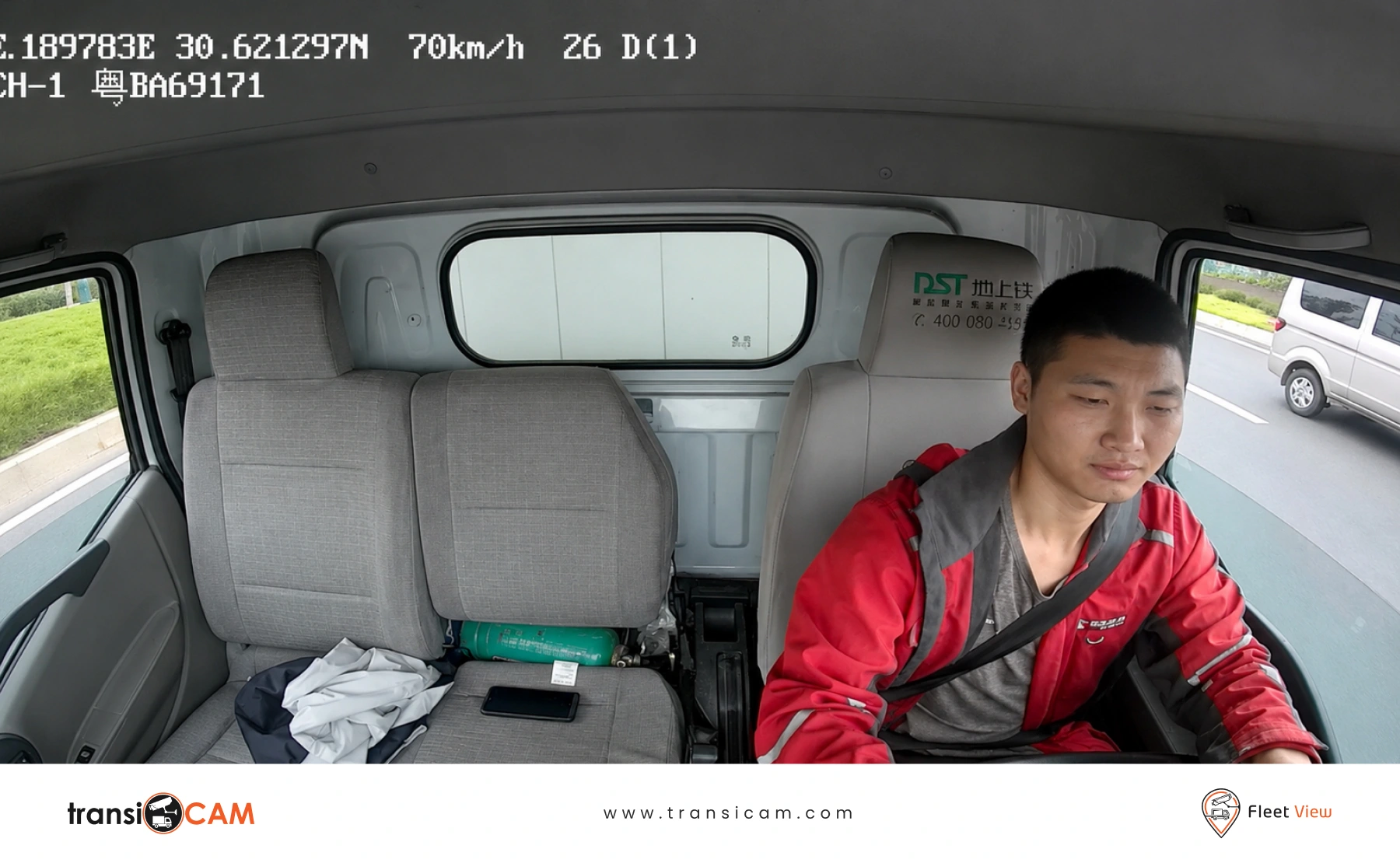
Fatigue is a serious concern for organisations operating vehicles over long distances, across demanding schedules or in remote environments.
Even experienced drivers can be affected by disrupted sleep, extended shifts, monotonous roads and challenging working conditions.
For fleet operators, the issue is not simply identifying an individual who appears tired. It is understanding the conditions that contribute to risk and creating an environment where drivers are supported before a situation becomes more dangerous.
Driver fatigue monitoring can provide an additional layer of visibility when combined with clear operational policies, responsible management and appropriate safety practices.
 What Is Driver Fatigue Monitoring?
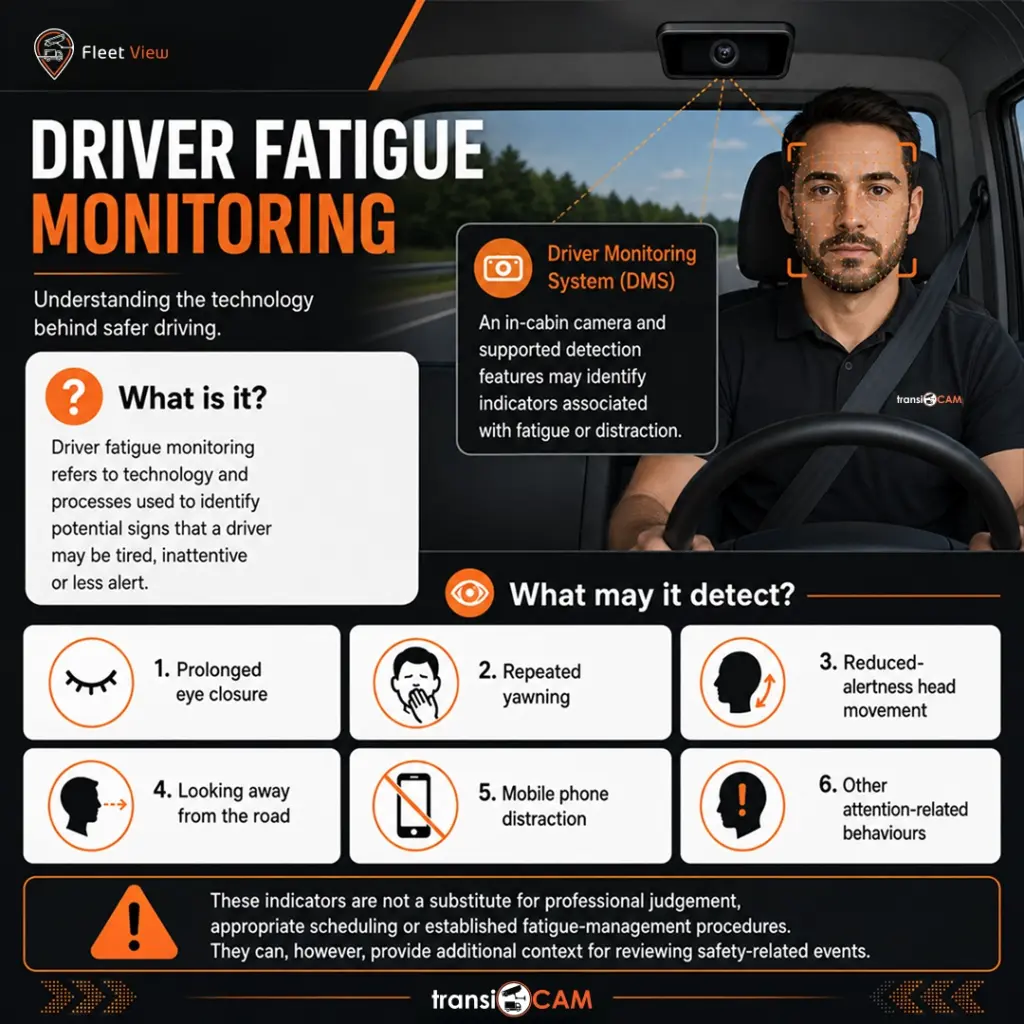
Driver fatigue monitoring refers to technology and processes used to identify potential signs that a driver may be tired, inattentive or less alert.
A driver monitoring system, often described as a DMS, may use an in-cabin camera and supported detection features to identify indicators associated with fatigue or distraction.
Depending on the device and configuration, these indicators may include:
- Prolonged eye closure.
- Repeated yawning.
- Head movement associated with reduced alertness.
- Looking away from the road.
- Mobile phone distraction.
- Other attention-related behaviours supported by the hardware.
These indicators are not a substitute for professional judgement, appropriate scheduling or established fatigue-management procedures. They can, however, provide additional context for reviewing safety-related events.
Why Fatigue Is a Significant Fleet Safety Concern
Australian fleet operations often involve long travel distances, regional routes, early starts and variable operating conditions.
Freight drivers, field service teams, passenger transport operators and remote-site workers may encounter fatigue-related pressures that develop gradually rather than appearing as a single obvious event.
Potential contributing factors include:
- Irregular shifts.
- Extended driving periods.
- Overnight operations.
- Poor sleep.
- Physically demanding work before driving.
- Repetitive highway conditions.
- Tight schedules.
- Remote travel with limited opportunities to stop.
A responsible safety strategy considers these broader circumstances instead of treating fatigue solely as an individual performance issue.
How Driver Monitoring Systems Work
A driver monitoring system generally uses a driver-facing camera positioned to observe relevant aspects of the driver’s face and head movement.
Where the relevant features are enabled, the device can identify selected indicators and generate an alert or event for further review.
In-Cab Alerts
Some configurations can notify a driver when a supported event is detected.
An alert may encourage the driver to reassess their condition, take appropriate action or follow company procedures.
Event Capture
When a potential risk is identified, the platform may retain relevant footage and associated event information for authorised review.
This allows safety teams to assess the circumstances surrounding the alert rather than relying on a notification alone.
Review and Follow-Up
Fleet managers can use the available context to determine whether further action is appropriate.
The response may involve a conversation with the driver, a review of scheduling practices or an examination of recurring operational patterns.
Fatigue Monitoring Should Support Drivers, Not Punish Them
Driver-facing technology can raise understandable concerns if workers believe cameras exist only to find mistakes.
A more effective approach focuses on protection, fairness and transparency.
Drivers should understand:
- Why the cameras are being introduced.
- What information is recorded.
- Who can access footage.
- How long relevant information is retained.
- How safety events are reviewed.
- How footage may protect them after an incident.
- What processes apply when a concern is identified.
The objective should be to improve safety and support professional drivers, not create a culture of unnecessary surveillance.
Combining DMS With Road-Facing Video
A driver-facing camera provides one part of the picture. A road-facing camera helps explain the environment in which an event occurred.
For example, an alert may initially suggest that a driver looked away from the road. Road-facing footage may reveal that the driver was responding to an unexpected situation or checking surrounding hazards.
Reviewing multiple perspectives can help safety teams avoid conclusions based on incomplete information.
This combination can also help identify:
- Sudden changes in traffic conditions.
- Near misses.
- Harsh braking events.
- Unsafe behaviour by other road users.
- Environmental factors affecting driver attention.
A fair review considers the full context rather than treating every alert as proof of unsafe conduct.
Understanding the Role of ADAS
Advanced driver assistance systems, commonly referred to as ADAS, focus on external driving risks.
Depending on the hardware and settings, ADAS features may identify events such as:
- Forward collision risks.
- Lane departure.
- Following-distance concerns.
- Pedestrian proximity.
- Other supported road-related warnings.
DMS and ADAS serve different purposes.
DMS looks for indicators associated with driver attention and alertness, while ADAS focuses on conditions outside the vehicle.
Together, where appropriately configured, these tools can provide a broader view of safety-related activity.
Using Video Evidence for Better Driver Coaching
Effective coaching starts with a clear understanding of what happened.
When managers can review relevant footage and event context, conversations can become more specific, constructive and fair.
Instead of saying, “You triggered a warning,” a manager can discuss the circumstances surrounding the event and explore practical improvements.
This may include:
- Reviewing rest opportunities.
- Adjusting route planning.
- Discussing distraction risks.
- Recognising correct responses to road hazards.
- Examining repeated alerts across particular shifts.
- Identifying operational pressures affecting multiple drivers.
A well-managed coaching process can also highlight positive behaviour and reinforce safe driving practices.
Looking Beyond the Individual Driver
If several drivers experience fatigue-related alerts on the same route or shift pattern, the issue may reflect a broader operational challenge.
Fleet operators should consider whether:
- Rosters create excessive pressure.
- Delivery windows are unrealistic.
- Drivers have suitable opportunities to rest.
- Remote assignments involve long return journeys.
- Worksite demands contribute to fatigue before driving begins.
Video telematics can support these discussions by providing additional evidence, but it does not replace management responsibility.
Choosing the Right Fatigue Monitoring Solution
Before implementing a system, ask practical questions.
Does the hardware support the events your organisation needs to monitor?
Can authorised teams review relevant footage alongside the alert?
Are camera placement and image quality suitable for the vehicle?
Can event settings be configured to match operational requirements?
Is there a clear process for handling privacy, access and driver communication?
Can the solution integrate with existing fleet technology?
A successful implementation depends on both the technology and the policies surrounding its use.
How FleetView Supports Driver Safety
FleetView driver safety solutions can support appropriately configured driver-facing cameras, road-facing footage, safety alerts and evidence-based review workflows.
Depending on the selected hardware and deployment, organisations can use available video context to investigate events, support coaching conversations and improve visibility across their fleet.
FleetView can also work alongside Geotab-connected fleet environments where organisations want to combine video with existing operational information.
Frequently Asked Questions
Can a Driver Monitoring Camera Detect Fatigue?
Supported driver monitoring cameras may identify indicators associated with fatigue, such as prolonged eye closure or yawning. Detection capabilities depend on the hardware, software and system configuration.
Does Fatigue Monitoring Replace Driver Rest Policies?
No. Monitoring technology should support, not replace, appropriate fatigue-management procedures, scheduling practices, driver education and operational oversight.
Can Driver-Facing Cameras Help Protect Drivers?
Yes. When managed appropriately, footage can provide context during incident investigations and help demonstrate when a driver responded responsibly to a difficult situation.
Are All Driver Alerts Evidence of Unsafe Driving?
No. Alerts should be reviewed in context. Camera positioning, driving conditions and the circumstances surrounding an event can all affect interpretation.
Can Driver Fatigue Monitoring Integrate With Other Fleet Systems?
Some solutions can integrate with broader fleet technology, depending on the selected platform and hardware.
Build a More Supportive Fleet Safety Strategy
Driver fatigue monitoring is most effective when it supports a broader commitment to safer schedules, fair coaching and informed operational decisions.
Request a FleetView safety demonstration to explore driver monitoring and video telematics options for your fleet.